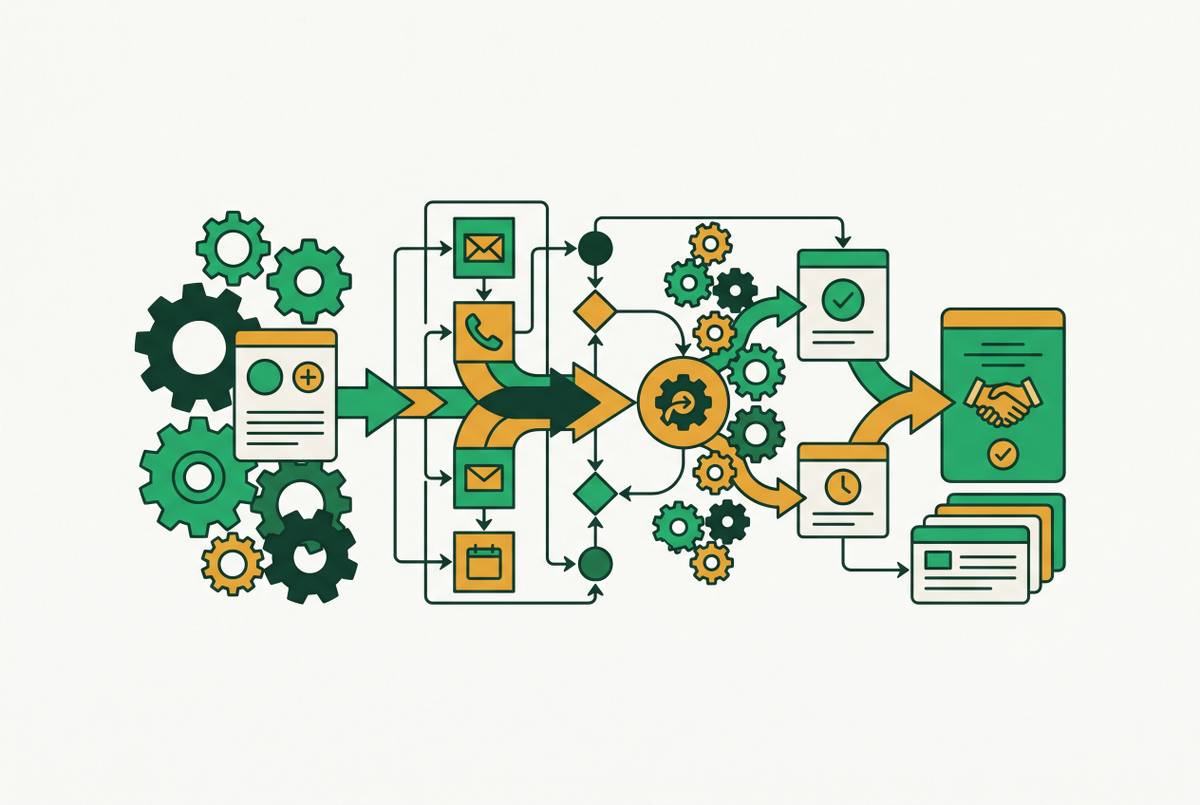
Follow-Up Call Scripts After an Initial Sales Demo
Move past demo silence with a structured call that surfaces the real blocker.
A follow-up call after an initial sales demo has one job, which is to surface the blocker and earn a committed next step. The scripts below turn that job into a practical conversation, with a specific reason to dial, a question that uncovers what is stuck, and one clear ask.
Why the follow-up call is a second pitch, not a check-in
The demo went well, the prospect asked sharp questions, and then came silence. That silence can feel like a verdict on the product, but enthusiasm and commitment are different things. The demo creates an emotional peak, while the unresolved concern remains between the prospect and a decision. As that peak fades, the concern has less competition.
A check-in asks the prospect for a status report. A second pitch gives them new information tied to a specific moment in the demo. It explains why the call is happening today and ends with one closed question. It is a focused attempt to move past the point where the first conversation stopped.
Why most post-demo follow-ups fail before the rep dials
The first familiar pattern starts with a CRM task turning red. Nothing has changed, but the rep calls anyway and asks whether the prospect has had a chance to think. A quick answer often ends the call.
Timing goes wrong when a rep lets interest cool before coming back with an answer. Then, anxious to recover momentum, the rep stacks questions about the demo, the budget, and the next meeting into one breath. Vague answers to several questions tell the rep less than a clear answer to one. The quieter failure comes later, when most reps stop after two or three touches even though most closed deals take far more contact that helps the prospect. Recognition matters here because these are problems a call plan can address.
The structure every post-demo follow-up call needs before the script
Before dialing, run a pre-call check through five parts, which are the reference, reason, relevance bridge, single request, and retreat path. The reference names the last touchpoint, with details like the day of the demo or the concern the prospect raised. The reason states what is new today, such as an answer to that concern. The relevance bridge connects that answer to the problem the prospect actually named. Without that link, even useful information can sound like more news about the product.
Next, choose one request that calls for a yes, a no, or a date, so the prospect has more to do than keep thinking with no end in sight. Prepare a graceful exit if the answer is no, so the call does not end with a verbal door slam. Diagnostic questions may help uncover the blocker, but they should serve that single request. The structure is non-negotiable, while the wording can change with the conversation.
Timing the call: when to dial after the demo
If the demo just ended and the prospect raised a clear concern, make the primary follow-up call within 24 hours. Send the recap email within the first hour, then use the call to build on that written record. This keeps specific moments available as fresh shared memory. If answering the objection requires research, take the preparation time needed to return with something useful.
If a proposal has just been sent, allow two to three business days for review before calling. That gives the prospect time to read while the rep can still take part in the team's discussion. If the last call went unanswered, wait 5–7 business days before the next dial and vary the time of day. A prospect who never answers at 9am may answer at 4:45pm.
Script 1: the call within 24 hours of the demo (engaged prospect, clear blocker)
Use this version when the prospect was engaged and the demo left a specific concern unresolved. Fill the placeholders with the concern and the answer actually prepared.
Hello [prospect], [rep name] from [company] here. In the demo yesterday, you raised [specific concern]. [prepared answer] addresses [problem the prospect named]. If that resolves the concern, please confirm whether [next step] on [date] works. If not, the remaining concern can be the focus before another meeting is booked.
The opening establishes shared context, while the answer gives the prospect a reason to listen. The bridge shows why that answer matters to their situation. The close asks for a firm next step if the concern has been answered, while leaving room for it to still need work. If the prospect names another blocker, the call has still helped. When they are willing to explore further, ask what stood out or what they still need to confirm, one question at a time.
Script 2: the call when the prospect has gone quiet after the demo
After one unanswered follow-up, use a low-pressure entry that acknowledges the outreach and checks whether the messages arrived. After several touches, change what the call offers along with the greeting. A product update, news from a competitor, or a change in the industry can give the rep a reason to call again if it ties to the prospect’s problem. Silence is not permission to manufacture news.
Hello [prospect], [rep name] from [company] here. There has been a gap since the demo on [day] and the follow-up message. Since then, [new development] has changed the discussion around [problem you named]. Please say whether that problem is still a priority. If circumstances have changed, the next conversation can reflect that rather than repeat the demo.
If nothing external has changed, return to an unanswered question in the demo notes and close that loop. Discover whether a budget freeze, new stakeholder, or competing priority has intervened. A quiet prospect may be stuck internally.
Script 3: the call when the prospect raised "I need to think about it"
A request for thinking time leaves the rep without a named concern to address. Price, implementation effort, team buy-in, or a stakeholder who was absent may be behind it. The useful move is to respect the time requested while making the concern easier to name. Giving the prospect possible categories lowers the effort of explaining what feels unresolved.
Of course, take whatever time you need. To make the next conversation useful, please name what needs more thought, whether that is the price, the implementation effort, the team buy-in, or something else.
Pause after that invitation and leave the silence alone. It is working space for the prospect. Once the prospect names the concern, answer it before asking for a date for the next step. If the answer is price, explore the cost of leaving the problem the prospect named unsolved before considering a discount. If it is internal buy-in, the call needs a different mode.
Script 4: the call to activate the champion for an internal sale
That mode is coaching. The champion is often the person who asked the most specific questions and connected the product to internal problems by name. Call that person as soon as possible after the demo to help them speak to decision-makers who were absent. Success means they feel equipped and confident.
Your questions in the demo, especially around [topic], tied right back to [internal problem]. This call is about preparing you for the conversation with [decision-maker]. Please say whether it would help to go through the business case and the questions stakeholders are likely to ask before that discussion.
With permission, work through the materials they need, including a one-page executive summary, stakeholder-specific talking points, an FAQ document, and a comparison sheet. Each should help the champion explain the case to someone who did not see the demo, with this call serving as one layer in a multi-stakeholder sequence that includes speaking with other decision-makers. The champion should not have to become a sales department overnight.
Script 5: the voicemail when the prospect doesn't pick up
A voicemail has a smaller job than a live call. It needs one callback hook.
Hello [prospect], [rep name] from [company]. In the demo on [day], you brought up [specific concern]. There is now [new answer or development] relevant to [problem discussed]. Please call [number] during [specific availability window] to discuss it.
The identity establishes who called, the concern supplies context, and the new information earns the callback request. The availability window makes the next move more concrete than “anytime. For persistent non-responders, a last-message version can say that outreach is pausing for now while leaving the door open if the problem remains on their radar.
Handling the objections that surface during follow-up calls
When a prospect is evaluating other options, ask which difference will determine the choice. That shifts the discussion toward decision criteria without disparaging a competitor. When the objection is price, return to the business impact and ask about the cost of leaving the problem unsolved over the next two quarters.
When budget is unavailable, distinguish between money that does not exist and money that has not yet been allocated. Asking when the next budget cycle starts gives both people a possible date to talk again. When a stakeholder needs to be involved, activate the champion and offer a second demo for that person. Across these responses, pause after the objection and speak more slowly. The prospect has just identified something important, so give it room.
What to do immediately after the demo to make the follow-up call land
The call depends on a precise record, and the 30-minute window after the demo is the moment to capture it. Record the concern in the prospect’s own words where possible, the person who asked the most substantive questions, any commitment or next step, and any absent stakeholder who was named. Send the recap within the first hour to anchor the discussion in the challenges raised. That email also becomes a written reference for the follow-up call. Specificity is much easier when it does not depend on memory performing on command.
AI-assisted post-call tools can address the administrative bottleneck by drafting notes, pulling quotes from transcripts, logging the outcome in the CRM, and routing a draft to the rep for review. The rep can then personalize a record of the key moments. This redirects attention from recall toward judgment. It also gives the opening line something concrete to refer to. Without reliable capture, even a well-intentioned rep can fall back on a generic opener.
Building the follow-up cadence so no deal decays between calls
A good script without a cadence is a single dart thrown in the dark. A planned sequence gives the rep a way to keep at it, with a reason and a planned next step for each touch. Tell the prospect when to expect the next call, text, or email so the contact is anticipated. The sequence should build on what was said so each channel brings more than the same request again.
Consistency becomes harder across a large pipeline. Automated post-call detection, draft generation, outcome logging, and queued touches can help. Those tools support the sequence, but they cannot supply the rep’s reason for staying in the deal. The cadence has a clear place to stop with a yes, a no, or a specific future date, even if keeping at it starts to feel uncomfortable before then.