Forecast Accuracy Models in B2B Sales Operations
Better forecasts require clean data upstream, not smarter algorithms downstream.

This article looks at why forecast accuracy in B2B sales stays stubbornly low no matter how much money gets spent fixing it, and argues that the real variable is the quality of the data feeding the model, not the model a team picks. Most sales leaders expect a forecasting tool to close the gap between what the pipeline says and what actually closes. What they get instead is a more sophisticated version of the same wrong number.
That happens because the factors that wreck a forecast sit upstream of any software: messy data, deals that slip quietly for months, pipeline hygiene nobody enforces, and reps who log activity only when a manager asks. A company buys a forecasting platform expecting it to solve a reporting problem. The tool then runs on the exact same compromised data that made the old spreadsheet wrong, and produces a wrong answer with better formatting.
A 120-rep SaaS company bought Clari after a strong demo. The root cause had nothing to do with Clari's algorithm: a large share of Opportunities had no logged activity in the 30 days before their expected close date. Clari was running advanced AI on data that simply wasn't there to run on.
That failure mode comes from structural data decay, not a bad vendor pick. B2B contact data goes stale at a steady monthly rate, and a large chunk of any CRM dataset is unreliable within a year of being entered. That decay caps what any model, however well built, can do with the records sitting in front of it.
What forecast accuracy measures and why the range matters
Forecast accuracy isn't one number a team can point to and call solved. It shifts with how far out the forecast reaches, how big the deals are, and how stable the market is, and those three dimensions have to be understood before any methodology comparison means anything.
Time horizon is the clearest driver. Each added month you try to predict adds real decay to the number, so if you want certainty, keep commit windows tighter instead of reaching for a quarterly number a model can't deliver.
Deal size adds its own layer of difficulty. A small deal and a deal many times larger are not the same forecasting problem wearing different price tags.
It's a baseline showing how wide the gap between forecast and outcome runs across the industry at a 90-day horizon, not a knock on any particular company's sales team.
The lesson to carry forward: accuracy belongs to the data and the conditions around it, not to the algorithm. The same model, run against clean records in a stable market, will outperform itself running against degraded records in a volatile one. Keep that in mind walking into the next section, because every methodology below inherits this same ceiling.
The Six Major Forecasting Methodologies
Each of the six methods below sits in its own accuracy band, and that band is set by the data quality and organizational discipline the method demands, not by how clever its math is.
Historical trending is the simplest approach: project forward from past performance patterns. Treat it as a sanity check against other methods rather than the main number a leadership team commits to.
Pipeline stage-weighted forecasting is the most common method built into CRM tools. It assigns a win probability to each pipeline stage and multiplies that by deal value. Nobody notices the drift this creates until the forecast stops matching reality. It also ignores time: a deal sitting in Proposal for 45 days carries real risk that a deal which just arrived in Proposal yesterday does not, and a method that only looks at stage, not time-in-stage, misses that risk completely.
Opportunity scoring goes a layer deeper. It scores individual deals against the attributes of past closed-won deals, things like industry, deal size, number of stakeholders, and engagement signals. Left stale, it collapses back toward guesswork. Opportunity scoring, left stale, collapses back toward guesswork, and it feeds much of the predictive scoring built into tools like Salesforce Einstein and HubSpot Breeze, per Mutiny's B2B AI guide.
Regression analysis takes the statistical rigor up another notch, because it models how multiple variables relate to revenue outcomes at once. With thin or stale data, that edge narrows fast.
AI and machine learning predictive models train on historical CRM data, engagement signals, and outside inputs to score deals and build an aggregate forecast. Among well-maintained models, this band sits at the top of the non-hybrid approaches, per Forecastio's guide. Accuracy collapses the moment data gets messy, the sales motion changes, or a new competitor shows up, because the model has zero awareness of anything it wasn't trained on, so the first time a black-box model gets a call wrong, its credibility goes with it, and reps stop acting on forecasts they can't explain to themselves.
Prescriptive analytics, or hybrid AI, is the most demanding method on this list, and its ceiling is high precisely because its prerequisites are high. It layers machine learning scoring with human review and logic checks before a forecast gets locked. Reaching it requires clean data, real governance, and organizational discipline that most teams have not yet built.
Why the inputs feeding every model matter more than the model itself
Every methodology above runs against the same hard ceiling: the quality, completeness, and freshness of the data feeding it. Not the sophistication of its math.
Five structural issues account for most forecast misses across B2B organizations: outdated CRM data, close dates nobody believes in, pipeline management that varies rep to rep, subjective judgment standing in for evidence, and deals that quietly slip month after month. Upgrading the algorithm fixes none of these. A sharper model applied to the same broken inputs produces a sharper-looking version of the same wrong answer.
Before any of this gets automated, plenty of teams are still running forecasts off spreadsheets and manually updated CRM records, a state Verse.ai describes as its own starting point before AI entered the picture.
Deal complexity compounds the problem of incomplete data. If the CRM shows contact with just one stakeholder, any model scoring that deal is working from half the picture, no matter how good its math is.
But the gap between a vendor's 95%+ claim and what practitioners actually experience comes down to one thing: clean-data pilots look nothing like the CRM most sales teams actually run day to day.
The data inputs that raise accuracy across any methodology
Three categories of input separate high-accuracy forecasts from low-accuracy ones, and they apply no matter which methodology sits on top of them.
CRM activity data, specifically how recent and complete it is, functions as a leading indicator. Logged activity in the weeks before an expected close date tells a model the deal is alive. The 120-rep SaaS case showed what happens without it: a large share of Opportunities carried no logged activity in the 30 days before close, leaving the model with nothing to work with. And because contact and activity data decay steadily month over month, this isn't a problem a team fixes once and moves on from. It needs ongoing upkeep.
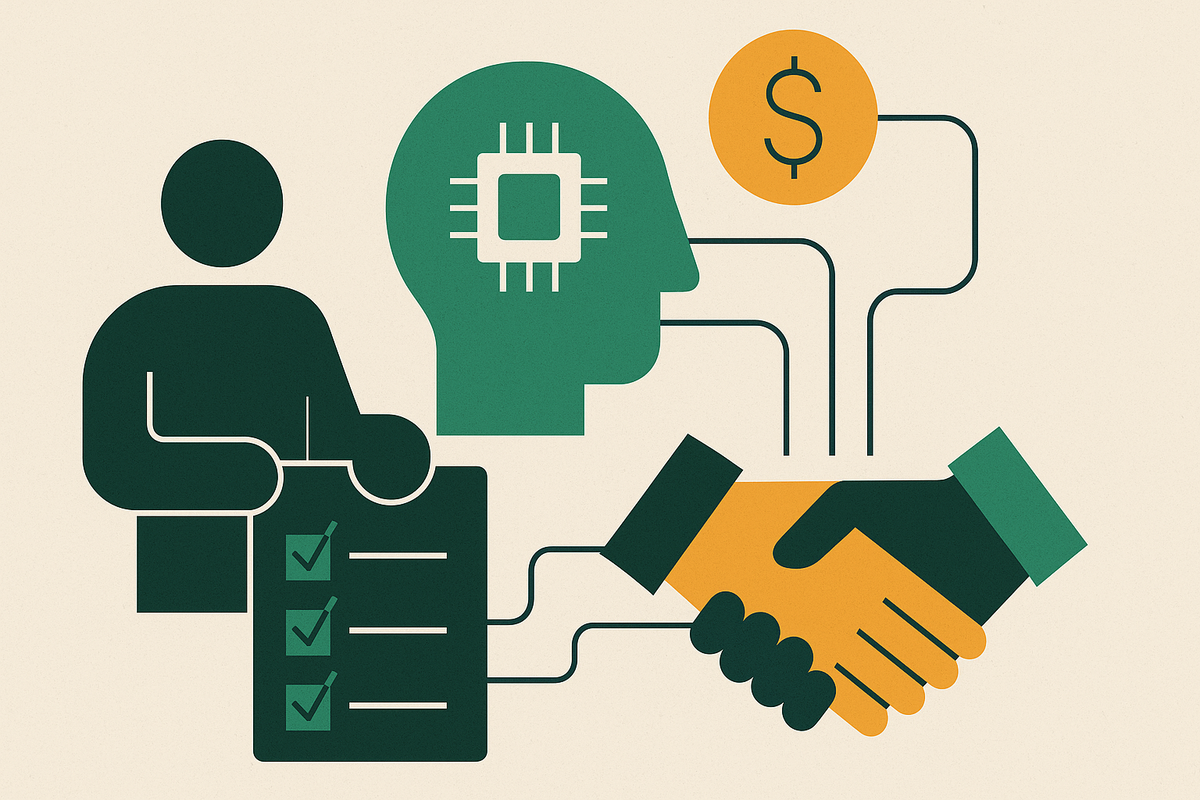
Conversation intelligence captures what CRM fields never record: objections a buyer raised, stakeholders mentioned by name on a call, next steps a rep actually committed to out loud. A case involving RevStream, a SaaS company, found that conversation intelligence surfaced real behavioral differences between top performers and average ones that stage-level CRM data couldn't show. Gong is named in Mutiny's 2026 B2B AI guide as a leading tool in this category. Stacking a conversation intelligence layer on top of a forecasting platform is what a hybrid input model looks like in practice.
Since most of a buyer's research now happens before a rep ever gets a call, intent data is often the only way to see that activity.
How tracking cadence and human review amplify whatever model a team runs
Weekly forecast reviews and human oversight of AI outputs do more than catch mistakes. They force the whole organization to sit down with the actual state of the pipeline on a fixed schedule instead of letting stale entries sit unchallenged for weeks.
Agentic AI, running fully autonomous with no human checkpoint, can execute multi-step workflows faster than a person could. Keeping a person in the loop is what catches exactly these edge cases before they turn into a bad forecast commit.
The Current Platform Landscape
The market for AI-driven forecasting tools is consolidating, and the resulting stacks push both the accuracy ceiling and the price tag higher at the same time. Buyers need a clear read on what they're actually paying for before they sign.
People.ai rebranded to Backstory in April 2026, so the same activity-capture and deal-intelligence platform now runs under a new name. Cost adds up fast once a team stacks pieces together: a 50-rep team running Clari across its full stack reaches a substantial year-one spend, and teams that layer Clari with a separate conversation intelligence platform report a significant combined cost per user, per month. The accuracy gains from stacking tools this way come at a cost. They are not free.
Fortune 500 companies pair a forecasting platform with a conversation intelligence tool, and that is what the hybrid input model looks like at scale. That same pairing also introduces integration work and data-governance complexity that a smaller team may not have the staff to manage well.
For teams not ready for a net-new platform, CRM-native AI already built into tools like Salesforce Einstein and HubSpot Breeze offers predictive scoring and forecasting as a baseline, per Mutiny's B2B AI guide.
Where the prevailing narrative overstates what AI forecasting delivers
Vendor claims of 95%+ accuracy describe well-run systems operating under favorable conditions. Most B2B sales teams run under conditions well short of that, which drags their actual forecast accuracy down from the headline number vendors advertise.
AI and machine learning methods do reduce forecast variance compared to manual roll-ups. How much of that real improvement a team actually sees depends on whether its implementation runs on clean data or on the CRM hygiene most teams actually live with.
Vendor marketing rarely addresses the failure modes that matter most. When a sales motion changes, a new competitor enters the market, or sales cycles stretch out (as they materially have since 2022), a model trained on the old conditions keeps confidently projecting those old conditions forward. It has no way of knowing what it was never trained to recognize.
Forrester's 2026 B2B predictions warn that if generative AI use goes ungoverned, it will cost B2B companies more than $10 billion in enterprise value. Governance isn't a side issue to forecasting accuracy. It sits at the center of it.
Trust functions as its own accuracy problem. A model producing outputs reps don't believe is functionally less accurate than a simpler method people actually act on, because adoption decides how much of that accuracy gets realized in practice, regardless of how good the algorithm is on paper.
That points to a sequencing error a lot of teams make: chasing the top accuracy band before fixing data quality, review cadence, and human oversight. The conditions that produce 95% accuracy come out of solving the input problem first. They are not a shortcut around it.
A sequenced approach to improving forecast accuracy from wherever a team starts
Improving forecast accuracy follows the same order regardless of team size or which method a team currently runs: fix the data first, then the methodology, then the tooling. Not the reverse.
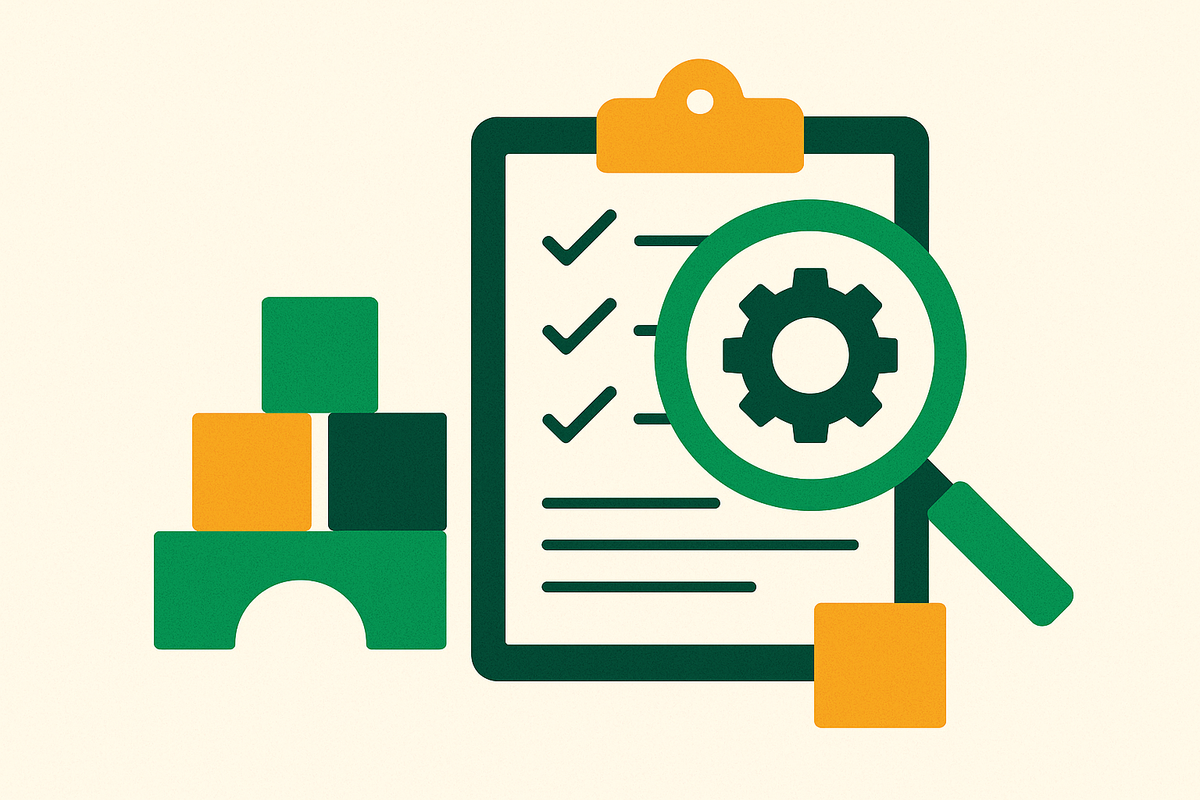
Start by auditing what the model actually sees. Before you switch methodologies or sign a new software contract, check what percentage of Opportunities carry complete, recent activity data. The 120-rep SaaS case is the template for this kind of audit, and it's often the fastest way to find out why a forecast has been wrong for months.
Clean and structure pipeline stages next. The RevStream case built a 90-day milestone framework before bringing in any AI tooling, and that shows this sequencing done in the right order.
Add signal layers once that foundation is clean. Layered onto a noisy foundation, they just add more noise with better production value.
Match methodology to data maturity, not ambition. If your data is thin or messy, start with stage-weighted forecasting or opportunity scoring before moving to machine learning. Neither approach is right for every team, and picking based on data maturity beats picking based on what sounds most advanced.
Build in a human review checkpoint. Lock in a weekly cadence with a defined logic-test gate before any forecast gets committed. This single process step is what separates a hybrid system from a black box, and it's what keeps accuracy from drifting once the initial setup work is done.
Automate the capture, not the judgment. Tools that log CRM activity automatically, draft follow-up messages, and surface deal signals remove the rep-behavior bottleneck that degrades data quality. That's where automation pays off most clearly, and it sits upstream of the forecasting model.
The real difference between a team stuck at low accuracy and one running at high accuracy rarely comes down to which algorithm sits on top. It comes down to whether reps consistently generate the logged activity data that any algorithm, however good, actually needs to work with.